The Rowley Expedition

Get
Involved

Dr Sarah Rowley · Mesophotic Research Initiative · 2024–2026


Dr Sonia J. Rowley
Lead Researcher

Dr Sarah
Rowley

Evolutionary marine biologist and CCR diving pioneer with over 40 years of diving experience. Dr Rowley specialises in gorgonian octocoral taxonomy and mesophotic reef ecology, working at depths of 50–200m where few researchers have ventured. Her work on new species discovery and deep reef conservation spans the Indo-Pacific.

Dr Rowley leads the Atolla Research Initiative, based at the Scripps Institution of Oceanography. She is also Research Faculty at SOEST University of Hawaii, Scientific Associate at the Natural History Museum London, and Research Associate at the Smithsonian Institution.

Scripps Institution of Oceanography — Lead Research Programme, 2024–2026
CCR Diving Programme · Mesophotic Zone 30–200m
Nature Communications — Manuscript Under Review, 2026

Pacific Ocean — 2024 to 2026

Expedition
Timeline

March 2024
Inaugural Dive, Station Alpha

First ROV deployment off the coast of Monterey Bay, reaching 650m. Documented 14 distinct Atolla specimens exhibiting alarm bioluminescence in response to predator simulation. First high-definition video record of the "burglar alarm" display at depth.

Monterey Bay 650m CCR 14 Specimens
August 2024
Deep Pacific Survey

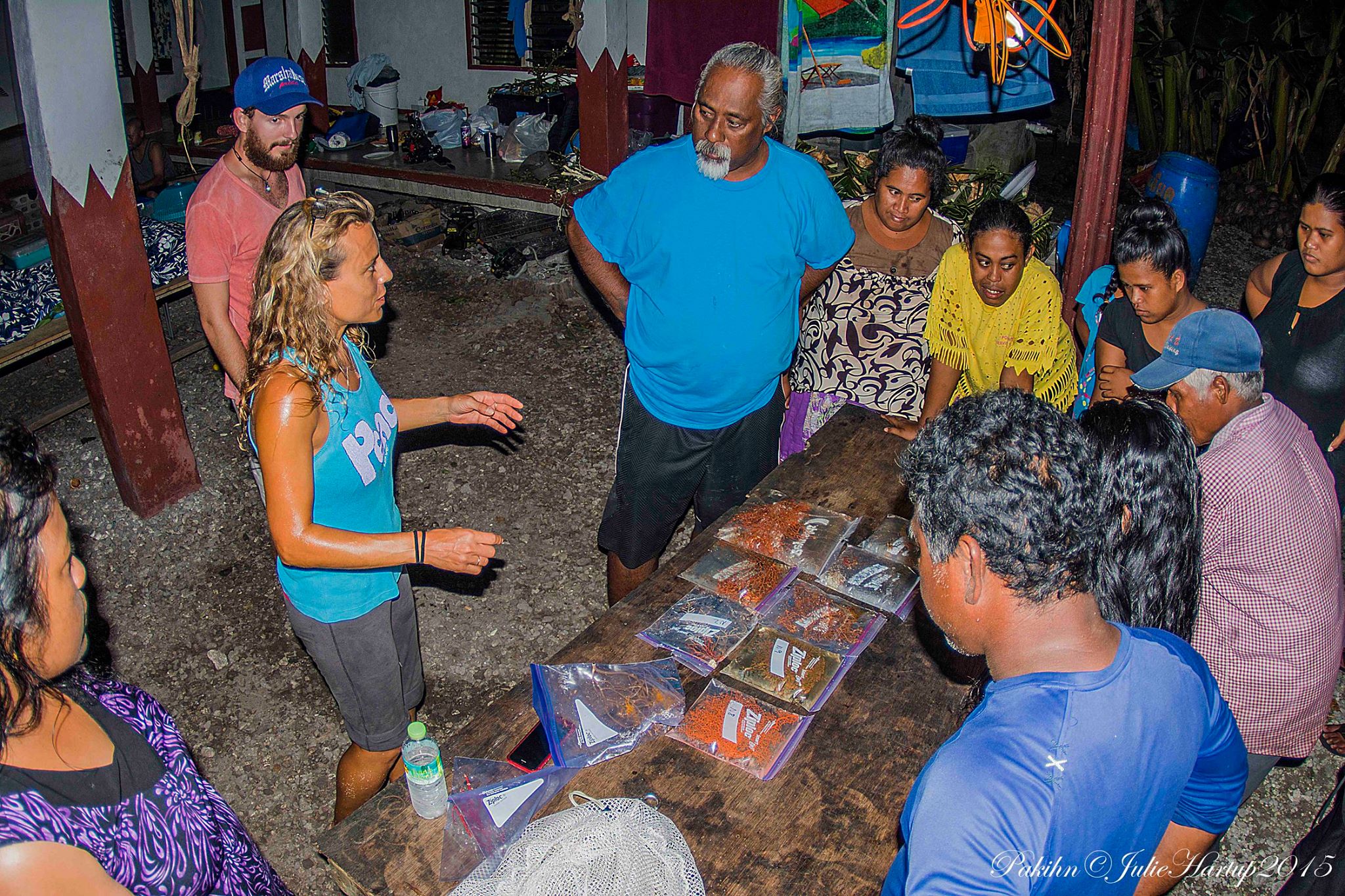
Return expedition to Pohnpei and surrounding atolls. Extended CCR diving programme to 200m with specimen collection, phylogenomic sampling, and habitat photography across 12 study sites.

CCR Diving Pohnpei Time-Series
January 2025
Species Identification Campaign

Collaboration with the Natural History Museum London and Smithsonian Institution to formally describe new gorgonian species collected during field expeditions. eDNA sampling initiated across 12 study sites to complement physical specimen data.

NHM London MBARI 6 Phenotypes eDNA
June 2025
Timor-Leste Exploration

First expedition to breach the 1,000m threshold with a new pressure-rated ROV. Unprecedented observations of bioluminescent displays at bathypelagic depths. Data currently under peer review for Nature Communications.

200m Mesophotic Under Review
2026 — Ongoing
Open Data Initiative & 2026 Season

Full dataset release to the global research community via open access repositories. Citizen science programme to assist with specimen classification from expedition footage and photography. Continued field expeditions to Pohnpei and Timor-Leste through 2027.

Open Data Citizen Science Crowdfunding

How to Help

Get Involved

01
Citizen Science

Help classify bioluminescence events from our expedition footage through the Zooniverse platform. No scientific background required — just curiosity and careful eyes. Each classification directly advances our understanding of deep-sea signalling.

Join the programme →
02
Fund a Dive

Each expedition dive day carries real costs in equipment, logistics, and crew. Contributions of any size directly extend the number of survey days we can complete in 2026. Supporters receive field dispatches and early access to findings.

Support the expedition →
03
Research Partnership

Institutions and companies working in marine science, climate research, or ocean technology are invited to join as formal research partners. Partnerships include co-authorship opportunities and access to the full expedition dataset.

Partner with us →